
Hashbang's Peter Peerdeman
  • Published on
    An always-on dashboard in the house has been on my wishlist for quite a while. Somehow, I never really went for it before. Recently I saw a live PV / Grid consume / Grid delivery panel at a friends house, and with the recent pv solar wifi stick mod in place, it was about time for a first prototype of this solution. as I don't want another device emitting light drawing our gaze and messing with our natural sleep rhythm, the solution had to be E-ink. There are some off the shelf products available, such as the proprietar...
  • Published on
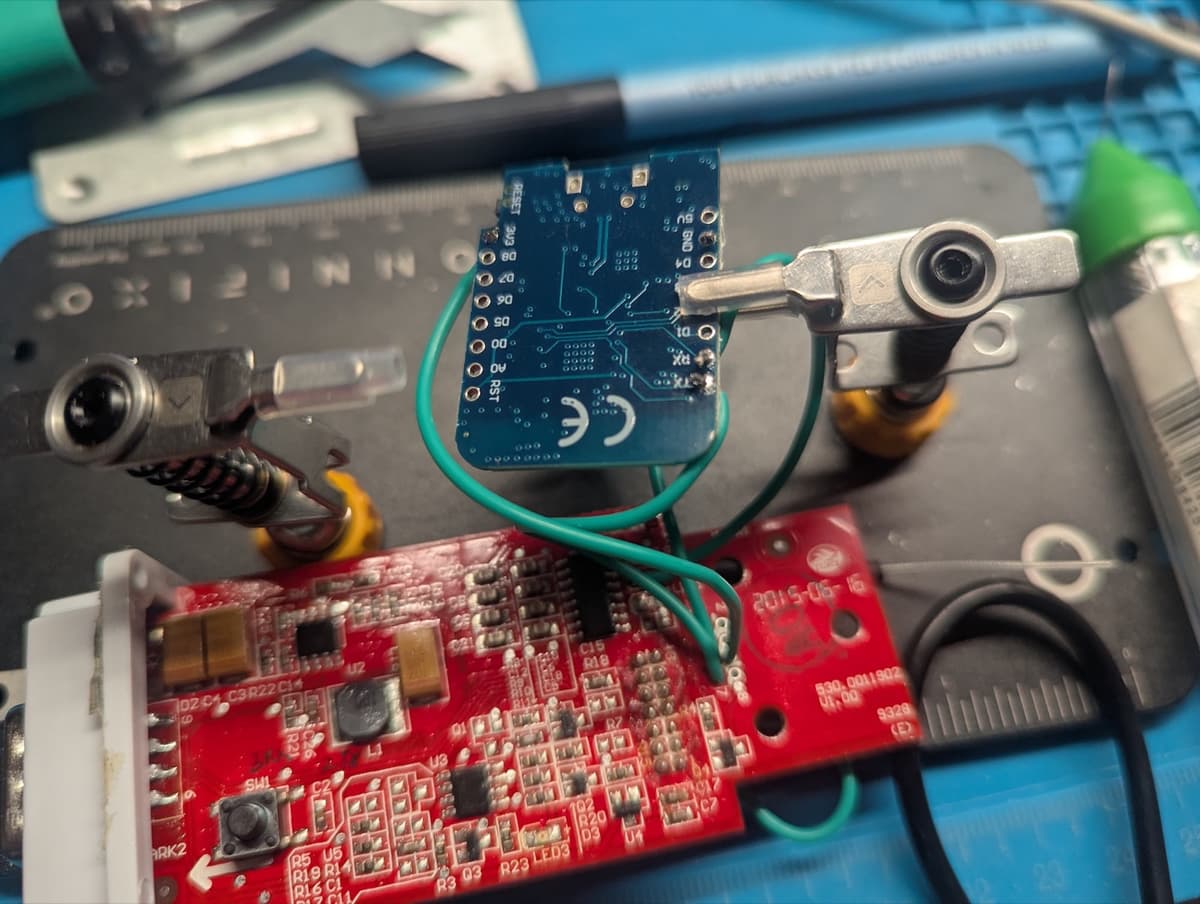
    With the Growatt stick rebuilt around a D1 mini I finally had my live local feed from the inverter working again, but in yet another data format from what i previously collected. The solar history was scattered over multiple places: a Grott influxdb table from the years I ran grott, a PVOutput mirror from the rasplogger age and a Growatt cloud CSV export going back to 2016. I would be nice to have the full history of solar in one consistent database I decided to make ...
  • Published on
    Back in 2018 I got my solar panel data out of the Growatt inverter by impersonating the growatt API with a man in the middle server. That worked, but still depended on the original ShineWiFi stick and our intercepting the traffic. When I removed the stick from the inverter completely I received an email that my stick might be down, leading me to believe that my man in the middle server wasn't as firewalled as I expected. ## alternative solutions ESPHome speaks...
  • Published on
    As I was workign on my home assistant setup, I wanted to install some sensors to get some temperature sensor data around the house. I remembered I still have a couple of Particle Photons lying around from the days I built a wireless outside weather station. This is some old hardware, based on the STM32F2 series combined with a BCM43362 for wifi connections. Combined with an [Adafruit BME680](https://learn.adafruit.com/adafruit-bme680-humidit...
  • Published on
    AI agents with access to local tooling provide amazing opportunities but also present some significant security risks, as you are basically providing remote code execution to an unpredictable entity. To reduce the attack surface, I want to run tun the agent in a sandboxed proxmox machine that is able to reach the internet, but for instance isn't able to access my local network. ## the unprivileged LXC container A full VM would work, but an LXC container boots fast, costs little extra memory and can be created "unprivileg...
  • Published on
    While cleaning up my obsidian vault I moved a bunch of notes out that had no business being there anymore. Of course, just deleting them committing would show their history in the git log, as every version of every note is still sitting in the history. For just any notes that is a bit untidy, but for notes that end up in a semi-published vault this is turning into a potential data...
  • Published on
    Most of my microcontroller experience has been at Arduino and micropython interpreted level. It works, it's great for prototyping but it doesn't really make you understand how the hardware actually works. Over the past weeks I have been working through a bare metal STM32 course, where you blink an LED by writing firmware in C, manipulating registers yourself and learning to use the datasheet to guide your programming. It has been quite slow but super interesting. Some highlights of the learners journey below. ## everything is a memory address On an ARM microcontroller, all peripherals are ...
  • Published on
    I've been tinkering with a cheap soldering iron before, but this was always keeping me from getting into hardware electroncis projects. It was about time to get this skill sorted, so I dove into the youtube rabbit hole of soldering (thanks nanofix and joeydoestech), bought some soldering gear and started practicing the basics that really help practical soldering: tip cleaning with brass, proper heat management of the iron and project, flux and leaded solder, I also...
  • Published on
    The micro:bit is a fun, small board with a nRF52 microcontroller and a pile of peripherals already soldered on, including a 5x5 LED matrix, two buttons, a microphone, a speaker, an accelerometer and a magnetometer. Programming is done with MakeCode, a visual block editor. You drag blocks together in a browser (also works on ipad!), and flashing can be done through usb or even with bluetooth. There is excellent Rust support and Rust programming guides for microbit as well, but of course we started out with the visual editor We tried a number of...
  • Published on
    For many years my offsite copy was an S3 bucket with glacier storage rules. It is a good setup and I would still recommend it to most tech savvy people: cheap to write, durable, no hardware to think about. I did find out the hard way that Getting data back out of deep storage is painful. Over the christmas break I rebuilt the 3-2-1 backup with a second NAS, at a separate location. My system pushes to that one, and th...
Support Hashbang, keep in touch 💌